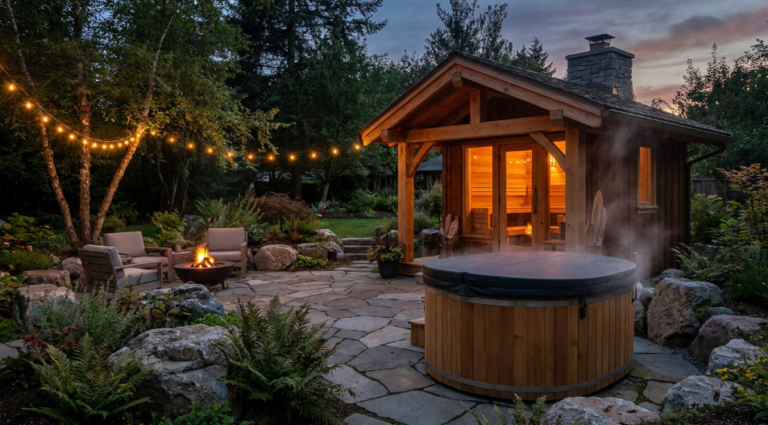
Outdoor Sauna Models Worth Comparing in 2026
The right way to judge sweat Decks is by how it will feel, fit, and hold up after the first month. Heat performance, electrical planning, materials, maintenance, and actual user habits matter more than showroom language.
My neighbor Dave, a retired HVAC tech in western Massachusetts, poured his own concrete pad last October and assembled a six-person cedar cabin sauna in a single weekend with his son. The kit went together beautifully. Then he wired the 240V circuit himself, skipped the permit, and tripped the main breaker on his first heat-up because he’d undersized the run. His electrician charged him $1,400 to redo it properly, pull the permit, and replace a scorched junction box. Dave’s sauna works great now. He uses it four nights a week. But the story captures the pattern I see over and over: people obsess over the unit and sleepwalk through the install.
An outdoor sauna is a real home upgrade. It pays back in daily use when the basics are done right. But the basics are the pad, the electrical, and matching the heater to the volume. Most home builds land between $2,490 and $16,980 depending on size, wood species, and whether you’re adding a cold plunge. Everything below is the long answer, with specs, install notes, the research that actually matters, and FAQs at the end.
What the Spec Sheet Is Really Telling You
Spec sheets are where most buyers get lost, because they’re reading for the wrong things. Here’s the short list that actually matters before you commit.
Models in this category include barrel saunas (6 to 8 ft long), cabin saunas (6×6 to 8×10), cube and pod variants, and glass-front panoramic builds. Heaters are typically 6 to 9 kW units from Harvia or HUUM. Match the heater to the cabin volume. Undersized heaters run constantly and burn out early. Oversized heaters cycle hard and waste electricity. The manufacturer publishes a sizing chart. Use it instead of guessing from a Reddit thread.
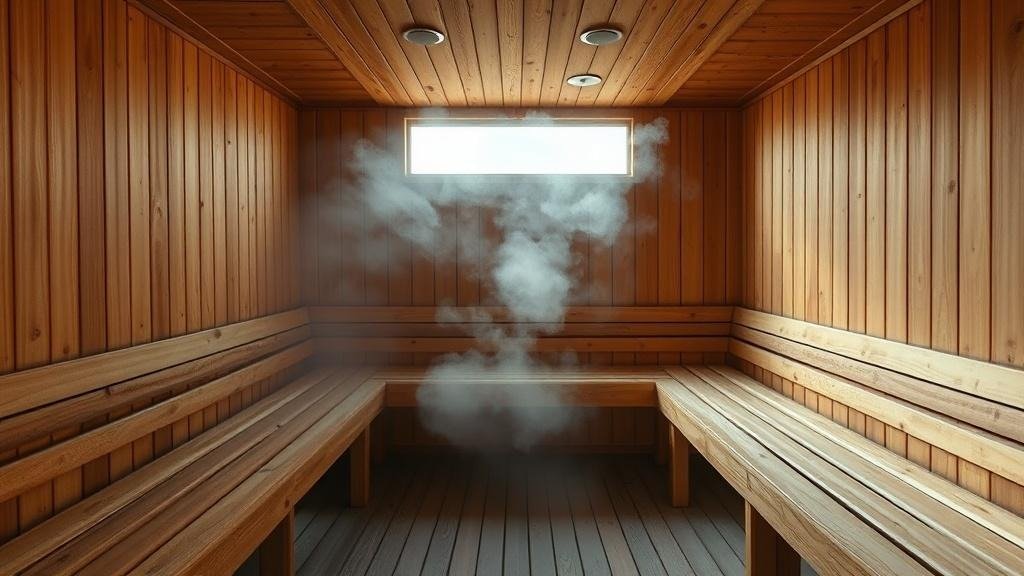
Wood species matters more than most people think. Pre-cut tongue-and-groove cladding in cedar, hemlock, thermo-aspen, or redwood is standard on anything worth buying. Cheap kits skip the tongue-and-groove and rely on butt joints with felt strips. Those builds leak heat and look weathered inside two seasons. It’s like buying a winter coat with no lining: technically a coat, functionally disappointing.
If you’re also looking at cold-plunge equipment, check chiller HP, filtration micron rating, ozone/UV sanitation, and tub material. A 1/3 HP chiller can hold 50°F in a small insulated tub in a temperate climate. It will struggle badly in a hot garage in August.
The Research, Without the Hype
The most-cited sauna study is the Laukkanen 2015 cohort published in JAMA Internal Medicine. The researchers followed 2,315 middle-aged Finnish men for 20 years and reported a dose-response relationship between sauna frequency and reduced cardiovascular mortality. Men using a sauna 4 to 7 times per week saw roughly half the cardiovascular mortality of those using it once a week. That’s a striking number, but it comes with the usual cohort-study asterisks: correlation, self-selected population, Finnish men specifically.
A 2018 BMC Medicine follow-up from the same research group reported lower dementia incidence at the highest sauna frequencies. The plausible mechanism involves heat acclimation, improved endothelial function, and a heart-rate response that mimics moderate-intensity exercise. Your heart rate in a 185°F sauna can hit 120 to 150 bpm. You’re not just sitting there. Your cardiovascular system is working.
For a home user, 20-minute sessions at 170°F to 195°F, two to four times per week, is a reasonable starting point. Hydrate before and after. Step out if you feel lightheaded. Anyone with a cardiac history, uncontrolled blood pressure, or who is pregnant should talk to a physician before starting.
Installation: The Part Everyone Underestimates
This is where Dave’s story repeats itself across thousands of builds. An outdoor sauna install is part carpentry, part electrical. Most adults can handle the carpentry side of a pre-cut kit with a helper and a weekend. The electrical side is a different animal entirely.
A typical traditional sauna heater pulls 4.5 to 9 kW on a dedicated 240V circuit at 30 to 50 amps. That is not a YouTube-tutorial project. A licensed electrician should run the circuit, pull the permit, and tie into your main panel. Cutting corners on this step is, bluntly, how house fires start.
Pad work comes first. A 4-inch compacted gravel pad with a drainage layer is sufficient for a barrel unit on flat ground. A 4-inch reinforced concrete slab is the right call for a cabin sauna in a cold or wet climate, running roughly $4 to $7 per square foot installed. In freeze-thaw zones or on soft soil, bring in a contractor. A pad that settles or cracks after the unit is sitting on top of it is expensive misery.
Ventilation gets overlooked constantly. An outdoor sauna needs an intake vent under the heater and an adjustable exhaust on the opposite wall near the ceiling. Without proper airflow, you get stale, stratified heat and a room that feels suffocating at 170°F instead of invigorating.
Permitting varies by jurisdiction. Many counties treat detached structures under 200 square feet as exempt from a building permit. But the electrical permit is almost always required because of the 240V circuit. Call your local building department before you buy. Not after.
What It Actually Costs, All In
The sticker price on the unit is maybe 60% of your total spend. Budget the pad, wiring, permits, and a small reserve for accessories and first-year maintenance.
On the sauna side: expect $2,490 for an entry-level barrel kit, $6,000 to $10,000 for a mid-tier cabin with a quality heater, and $12,000 to $16,980 for a panoramic glass-front or premium thermo-aspen build. Add $400 to $900 for a gravel pad, $1,200 to $2,400 for a concrete pad, and $600 to $1,800 for a 240V electrical run.
On the cold-plunge side: $4,500 to $7,500 for a residential insulated tub with an integrated chiller, $9,000 to $14,000 for a commercial-grade stainless build with full filtration. Stock-tank DIY setups land closer to $400 to $900 but require hauling bags of ice, which gets old fast.
Appraisers won’t add dollar-for-dollar return, but a well-built outdoor wellness setup functions as a selling feature in Northeast and Pacific Northwest markets.
On taxes: a residential sauna is rarely HSA or FSA eligible unless a clinician issues a Letter of Medical Necessity for a documented condition. Eligibility is patient-specific. Talk to your tax advisor before assuming.
Outdoor Traditional vs. Infrared vs. Cold Plunge DIY
The honest comparison comes down to footprint, install effort, heat-up time, and whether you’ll actually use the thing consistently.
An outdoor barrel sauna heats in 25 to 35 minutes and lives on a small pad. An indoor cabin heats faster but eats living space and requires dedicated venting. An infrared cabin runs at lower temperatures (120°F to 150°F) and plugs into a standard outlet, but produces a meaningfully different physiological response than a traditional Finnish sauna. If you want the cardiovascular load the Laukkanen data describes, you need the higher temperatures.
Cold plunges separate similarly. A purpose-built insulated tub with a 1 HP chiller holds 39°F to 45°F all day without ice. A stock-tank conversion can hit the same temperatures, but you’re buying ice constantly. A chest-freezer conversion is cheap but lacks filtration and is, frankly, a hack with a limited lifespan.
My opinion: the right answer is almost never the cheapest unit and almost never the most expensive one. It’s the build that matches your climate, your yard, your electrical panel, and the routine you’ll actually maintain three months from now.
Comparing Actual Models
Once you’ve sorted out your site constraints, the next step is looking at specific lineups and price tiers side by side. For the outdoor sauna side of this build, Sweat Decks is the reference we point readers to for full specs, pricing, and warranty details. It’s worth bookmarking before you start requesting quotes.
See also: How Algorithmic Stablecoins Function
FAQs
Will my electric bill spike from an outdoor sauna?
A 6 kW sauna heater running 1 hour costs roughly $0.60 to $1.20 at typical US residential rates. Three 20-minute sessions per week land near $4 to $8 per month. A 1/2 HP cold-plunge chiller in steady state pulls about 350 to 450 watts and adds $8 to $15 monthly in most climates.
Is an outdoor sauna safe during pregnancy?
Pregnant adults should not start a new sauna or cold-plunge routine without explicit clearance from their OB-GYN. Core temperature changes carry real fetal risks, particularly in early pregnancy. This is a clear case where you defer entirely to your physician.
How loud is an outdoor sauna?
A traditional sauna heater is silent in operation. A cold-plunge chiller runs at roughly 45 to 55 dB at one meter, comparable to a quiet conversation. Position the unit where the chiller hum won’t bother neighbors or adjacent bedrooms.
Can I run an outdoor sauna year-round in cold climates?
Yes, with caveats. Outdoor saunas are designed for cold weather and benefit from a slightly longer pre-heat in winter. Cold plunges with insulated tubs and integrated chillers handle below-freezing ambient temperatures if the chiller’s operating range allows it. Check the manufacturer’s spec sheet for low-temperature performance.
What is the lifespan of a quality outdoor sauna?
A well-built cedar or thermo-aspen sauna lasts 15 to 25 years with light annual care (sanding benches, treating exterior wood, cleaning the heater stones). Heaters are usually replaced once during that span. Stainless-steel cold-plunge tubs last 15 to 20 years; chillers are typically replaced or rebuilt every 6 to 10 years.
Do I need a building permit for an outdoor sauna?
It depends on your jurisdiction. Many counties exempt detached structures under 200 square feet from a building permit, but the electrical permit for 240V work is almost always required. Call your local building department first.
How long does it take to assemble a pre-cut sauna kit?
Most pre-cut barrel or cabin kits can be assembled by two adults in 8 to 16 hours, spread over a weekend. The pad and electrical work should be completed before the kit arrives.
Disclaimer. This article is general consumer information, not medical advice. Heat and cold therapies carry real cardiovascular load. Anyone with arrhythmias, uncontrolled hypertension, Raynaud’s phenomenon, recent cardiac events, or who is pregnant should consult a physician before starting any new sauna or cold-plunge routine.
Any 240V electrical work should be completed by a licensed electrician under the appropriate local permit.
HSA and FSA reimbursement on wellness equipment is patient-specific and depends on a Letter of Medical Necessity from a clinician. Talk to your tax advisor before assuming a purchase qualifies.